

The sustainability manager salary market reveals great insights: it is booming, with job postings for skilled professionals in this field having jumped by 91% in the early 2020s compared to previous years. Companies worldwide are changing their priorities by putting environmental and social governance first. Companies now hire green talent 46.6% more frequently than the overall workforce.
The money keeps getting better too. The sector’s salaries grew by 2.6% last year, beating the UK average of 2.4%. The future looks bright, as 84% of employers plan to raise sustainability salaries next year. People starting in ESG-related fields can expect to earn between $60,000 and $200,000, based on their sector and experience.
Our team has broken down what leading companies pay for different sustainability roles in 2026. You’ll learn about salary ranges from sustainability consultant positions to head of sustainability packages. The information helps both newcomers taking sustainability courses and professionals moving up from project management to senior roles. The time is right to discover the financial benefits of this meaningful career path.
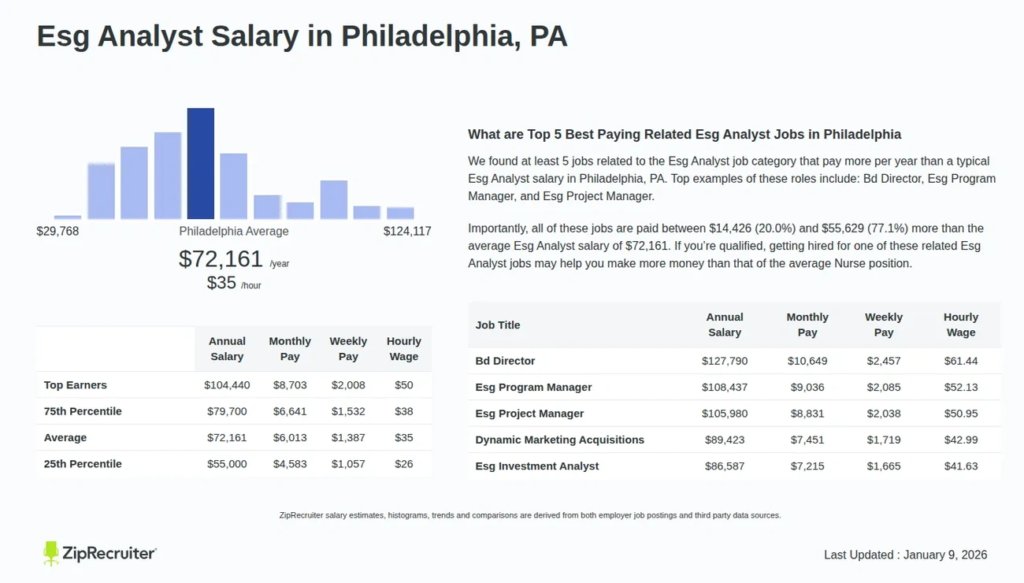
Image Source: ZipRecruiter
ESG Specialists play a key role in today’s business world. They help organizations navigate environmental, social, and governance challenges. Companies worldwide now recognize that environmentally responsible practices are crucial to success in the long run.
Experienced ESG Specialists review and put ESG philosophy and policies into action. They create evaluation frameworks based on industry standards and best practices. Their main tasks include checking how environmental and social megatrends affect organizations. They create ESG strategies that match business goals and make sure reporting follows regulations. These experts also work with stakeholders by sharing materials with investors, board members, and operational teams.
They also help organizations tackle sustainability challenges like energy management, greenhouse gas emissions, and water conservation.
ESG professionals earn competitive pay packages that reflect their expertise and market value. New ESG analysts in the U.S. typically earn between $ 70,000 and $ 92,000 per year. ESG managers and directors often earn more than $162,000 depending on their industry and location.
ESG careers typically offer packages between $70,000 and $200,000. The amount varies based on sector and experience. Global investment in ESG has doubled since 2019 suggesting that there is strong future earning potential.
The best ESG Specialists combine technical know-how with people skills:
Technical skills and people skills go together with one another, backed by real commitment to sustainability principles.
ESG Specialists have many paths to advance their careers. After several years, they often move up to senior analyst or lead positions. Here they manage teams and oversee ESG investing strategies. The next step might be ESG manager or director roles. These positions handle the organization’s overall ESG strategy, policymaking, and stakeholder relationships.
Chief Sustainability Officer represents the highest position in this field. They make sure ESG strategy fits with corporate goals. Other specialized paths include sustainability reporting, climate strategy, operations, policy, and social responsibility.

Image Source: Go Construct
A Sustainability Manager plays a vital role in modern organizations. We tasked them with striking the right balance between business operations and environmental impact.
Sustainability Managers guide company leadership as environmental advisors and help businesses minimize their ecological footprint. They evaluate departments and operations to spot areas that need improvement. Their work involves creating strategies to reduce greenhouse gas emissions, optimize transportation, manage waste disposal, and implement energy and water conservation measures. These professionals do more than address ecological concerns—they help companies achieve sustainability goals while staying profitable. They work across various departments, from engineering to finance, and weave sustainability objectives into core business processes.
The average sustainability manager in the UK earns £46,054 yearly as of 2026. Base salaries range from £30,000 to £68,000. Bonuses add another £964 to £8,000, which brings total compensation to £30,000-£71,000. Experience strongly affects salary growth—early-career professionals (1-4 years) earn about £39,943, while mid-career managers (5-9 years) make around £48,319.
Location makes a big difference in earnings. London-based managers earn more, with average salaries at £48,484 and total packages up to £75,000. German sustainability managers earn between €50,000 and €80,000 gross yearly.
Great sustainability managers blend technical expertise with people skills:
Hands-on industry knowledge, leadership skills, and economic thinking are vital for success in this role.
Sustainability managers can advance their careers in several ways. Experience opens doors to senior positions within their organization or at larger companies. Many become specialized consultants who focus on specific areas like net-zero initiatives, modern slavery compliance, or social and environmental impact assessments.
Education shapes career growth significantly. Advanced degrees in sustainability management or related fields boost income potential and qualification for promotions. Managing junior sustainability professionals provides valuable experience that increases earning potential. The growing awareness of sustainability issues and expanding legal requirements creates more opportunities for qualified sustainability managers, which points to excellent long-term career prospects.

Image Source: Career Plan B
Environmental consultants are pioneering ways to help organizations reduce their ecological footprint through expert assessment and advisory services. This role serves as a gateway to the sustainability sector and brings both challenges and opportunities for people starting their green careers.
These consultants provide expert advisory and assessment services to minimize environmental damage. Their work spans various areas. They assess how development projects affect the environment, collect and analyze site survey data, and write scientific reports. The job involves hands-on experience with environmental accidents, cleanup operations, and giving policy advice to businesses, landowners, and government entities.
These professionals work on environmental projects of all types or focus on specific areas. Common specialties include air, land, and water contamination; environmental impact assessment; waste management; emissions and climate change; or renewable energy. Unlike sustainability managers, environmental consultants usually work for consultancy firms on commercial or government contracts that tackle specific environmental challenges.
The financial outlook looks promising for newcomers to this field. Entry-level consultants with less than a year’s experience earn around £24,000 annually. With 1-4 years under their belt, earnings climb to about £28,000.
Fresh graduates typically earn between £23,000 and £25,000, based on their experience. Scottish environmental consultants start at £25,000 yearly, and experienced professionals can earn up to £50,000. Location matters a lot—London-based consultants often earn more than their regional counterparts.
Success in this field needs a mix of technical expertise and people skills:
The career path offers several ways to move up. Junior consultants learn from experienced colleagues before they start managing small projects. After about five years, they can advance to senior consultant roles where they manage staff, conduct site investigations, and allocate resources.
Moving up to principal consultant roles means focusing on team management and commercial development. Some choose to specialize in niche areas like marine ecology or air quality modeling, which often pay more. Experienced consultants might start their own practices or switch to environmental research, teaching, or science communication.
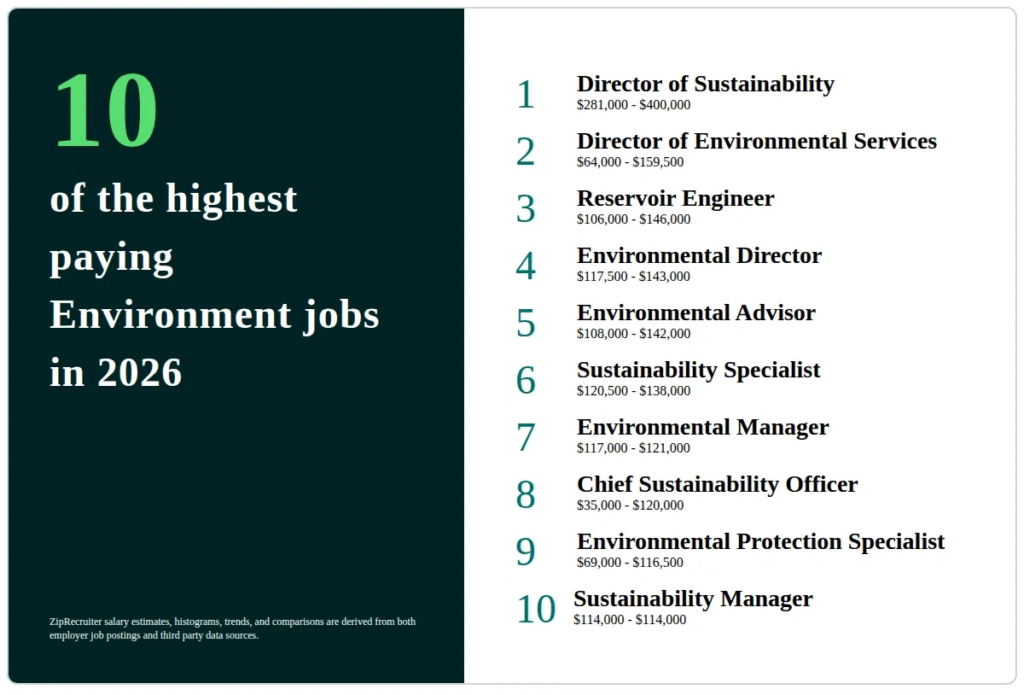
Image Source: ZipRecruiter
Sustainability consultants have become hot property in today’s market. These specialists blend environmental expertise with business know-how, and the market is expected to hit £13 billion by 2027.
We review and check environmental effects from projects, products, and services as sustainability consultants. The job involves finding how different activities disrupt the environment and suggesting ways to reduce harm. The role goes beyond just environmental issues—consultants give advice about social value, human rights, and corporate responsibility. You’ll find them working on homes, transport systems, factories, and city renewal projects. Their recommendations and assessments help organizations become greener and more sustainable.
UK sustainability consultants will earn around £36,264 on average in 2026. Fresh graduates start at about £25,853, while those with 1–4 years under their belt make £33,546. Top earners can pull in £50,000 yearly, though entry salaries begin at £25,000. Your location matters—London consultants usually earn more than their regional colleagues.
Great sustainability consultants need these key abilities:
Knowledge of ESG reporting frameworks, carbon accounting, and lifecycle assessment methods plays an important role too.
The field offers plenty of room to grow. New consultants start with specific projects and move up to handle bigger initiatives. After about five years, you can step up to senior consultant roles where you’ll manage people and give strategic advice. Principal consultant positions come next—these focus on leading teams and growing the business. Some experienced pros start their own consulting firms or switch to specialized areas like renewable energy, waste management, or energy transition.
Corporate sustainability has evolved from a specialized focus to a business necessity. Companies worldwide now place sustainability managers in key positions.
Sustainability managers help companies adopt eco-friendly business practices by creating and implementing strategies that reduce environmental impact. Their daily work involves monitoring environmental performance indicators, conducting sustainability assessments, and writing detailed reports for senior management. These professionals work with stakeholders from employees to customers and regulators on sustainability issues. They serve as the vital link between company operations and sustainability goals while leading initiatives that line up with broader ESG objectives.
The average corporate sustainability manager salary in the UK will range from £46,054 to £51,049 yearly in 2026. Base salaries typically fall between £30,000 and £68,000, with potential bonuses of £964–£8,000. The total compensation package ranges from £30,000 to £71,000. Experience directly influences salary growth—new professionals earn about £39,943, while mid-career managers receive around £48,319.
Sustainability roles show strong growth potential. In the last 12 months, 94% of employers raised salaries with no reported decreases. The outlook remains positive, as 84% of sustainability employers expect to increase salaries through 2026.
Success in corporate sustainability management requires a mix of technical expertise and people skills:
Sustainability managers must also keep up with the latest sustainability trends, technologies, and regulations.
Corporate sustainability managers have several paths for career growth. Experienced professionals can move up to senior roles within their organization or join larger companies. Some managers start their own consulting firms. They focus on specific areas like net-zero initiatives, modern slavery compliance, or impact assessments.
Education makes a big difference in career advancement. Advanced degrees in sustainability or related fields often lead to higher salaries and better promotion chances. Industry experts say the field looks promising. Growing awareness of sustainability issues and new legal requirements create more opportunities for sustainability management professionals.
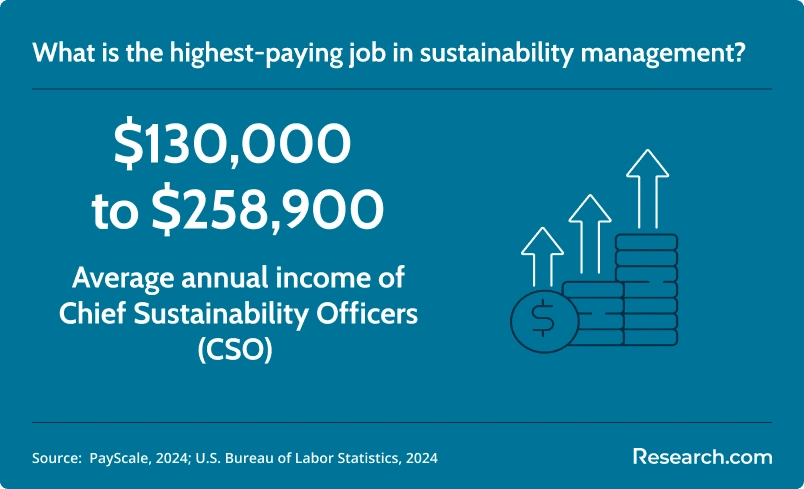
Image Source: Research.com
Environmental sustainability managers bridge the gap between ecological preservation and business operations. They champion green practices in organizations. Their role has become more important as companies worldwide focus on environmental responsibility.
Environmental sustainability managers make sure organizations follow environmental guidelines and meet their targets. They assess company activities to spot areas that need improvement and stay compliant with relevant laws. These professionals create and roll out environmental strategies that promote green practices throughout their operations. They lead pollution control, waste management, recycling, conservation, and renewable energy projects. Regular audits help them identify environmental problems and make needed changes across the organization.
These specialized professionals earn competitive salaries. UK-based environmental sustainability managers earn an average of £58,186 yearly as of February 2026. The salary translates to £4,849 monthly or £28.75 hourly. Salary reports vary between sources, with some showing average earnings of £51,049 or £46,054. Experience plays a key role in earnings. Early-career professionals (1-4 years) earn around £39,943, while mid-career managers make £48,319. Top earners can reach £68,000 yearly, and bonuses might push total compensation to £71,000.
Success in this role depends on several key skills:
Successful professionals blend technical expertise with people skills while staying dedicated to sustainability principles.
The career journey starts with relevant education, often backed by sandwich placements, vacation work, or volunteer experience. Professionals then move through roles with increasing responsibility. Experience opens doors to specialized areas like corporate social responsibility, environmental impact assessment, environmental management and auditing, or waste management. The push to meet environmental laws and achieve net-zero targets by 2050 creates steady demand for these experts.
Comparison Table
| Role | Average Base Salary (UK) | Salary Range | Key Responsibilities | Required Skills | Career Progression |
| ESG Specialist (Experienced) | £51,620 – £67,503 | £60,000 – £200,000 | Creating ESG policies, building evaluation frameworks, working with stakeholders | Analysis, clear communication, financial knowledge, sustainability expertise | Senior analyst → ESG manager → ESG director → Chief Sustainability Officer |
| Sustainability Manager | £46,054 | £30,000 – £71,000 | Environmental guidance, reducing emissions, managing waste, conservation programs | Problem-solving, decision-making, communication, project management | Senior positions in larger companies or specialized consulting roles |
| Environmental Consultant (Early Career) | £24,000 | £23,000 – £25,000 | Assessing environmental effects, conducting site surveys, writing scientific reports, handling accidents | Scientific background, analytical mindset, communication, technical skills | Junior → Senior consultant → Principal consultant |
| Sustainability Consultant | £36,264 | £25,000 – £50,000 | Evaluating environmental effects, suggesting improvements, providing guidance | Project management, data analysis, communication, critical thinking | Junior → Senior consultant → Principal consultant |
| Corporate Sustainability Manager | £46,054 – £51,049 | £30,000 – £71,000 | Creating strategies, tracking performance, working with stakeholders, ESG reporting | Problem-solving, decision-making, communication, analysis | Senior positions, consulting practices, specialized regulatory roles |
| Environmental Sustainability Manager | £58,186 | £39,943 – £68,000 | Ensuring compliance, putting strategies into action, auditing, waste management | Analysis, leadership, communication, technical knowledge | Specialized roles in CSR, environmental impact assessment, or auditing |
The sustainability sector shows exceptional growth, and compensation packages reflect how organizations value environmental expertise more than ever. Salary trends in all six analyzed professions show steady increases that exceed national averages. This financial recognition highlights sustainability professionals’ vital role in helping businesses tackle environmental challenges while staying profitable.
Technical skills vary between roles, but some core competencies prove valuable throughout the sustainability world. Employers look for analytical thinking, communication skills, project management expertise, and regulatory knowledge when hiring for these positions. Professionals who combine these abilities with specialized expertise create better advancement opportunities for themselves.
Most of them advance through roles with increasing responsibility and eventually reach senior management or director positions with six-figure salaries.
These practical salary insights are useful for newcomers who want to explore sustainability careers and for established professionals planning their next move. These roles not only are financially rewarding and meaningful, but they also lead organizational change and propel initiatives that boost both business performance and planetary health—an exciting career choice for 2026 and beyond.